AI Chat With Voice: Calls, Input, and Spoken Replies
AI chat with voice can mean dictation, live calls, or spoken replies. Learn the differences and try on-demand character audio with WSUP AI.
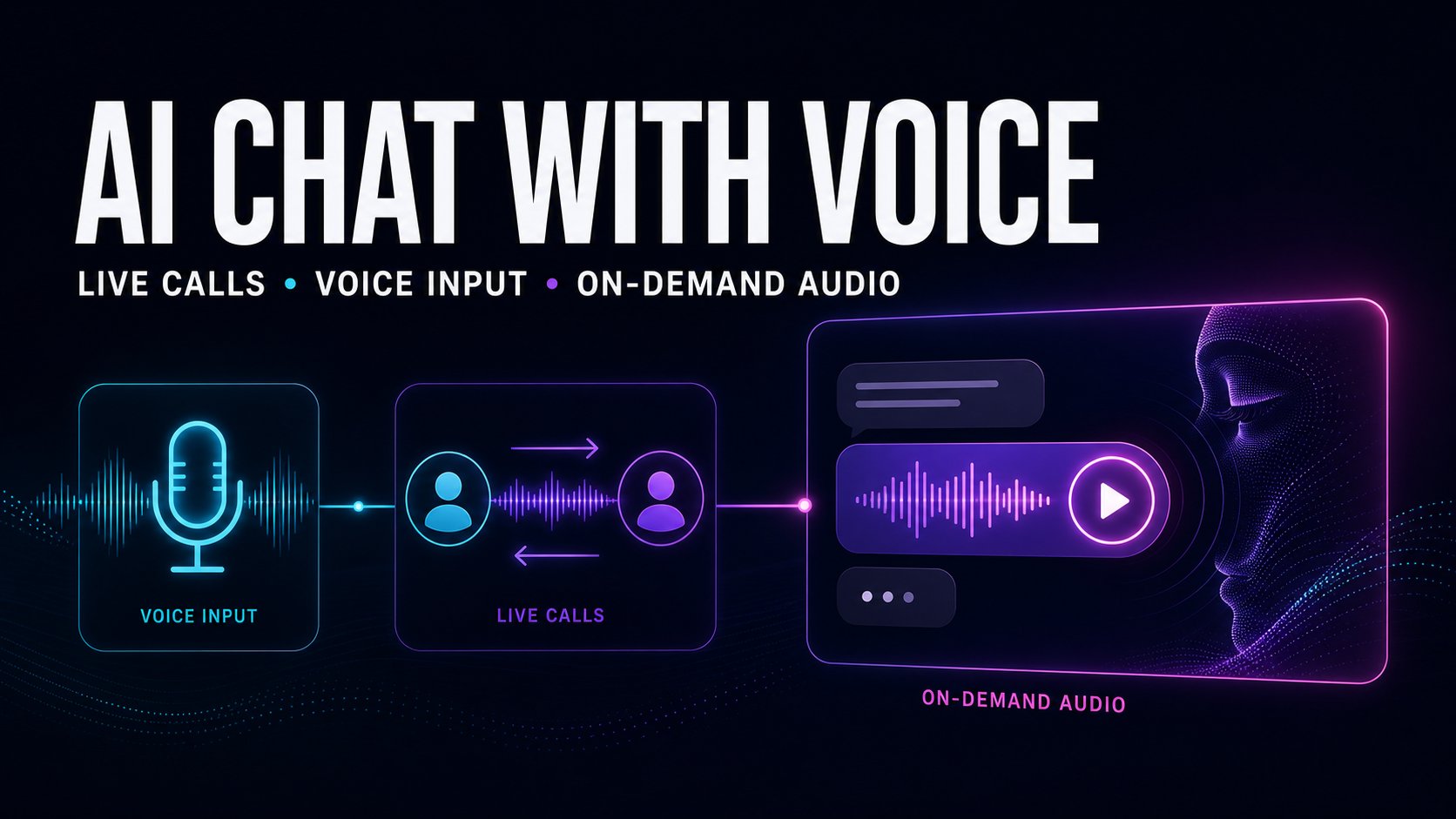
You're staring at a microphone icon in a chat app and trying to figure out whether this is a dictation tool, a live call, or just text with a play button. That confusion is normal, because ai chat with voice now means three different product shapes, and they're not interchangeable. If you want the right one, start with the job, not the label.
Table of Contents
The Three Ways Voice Shows Up in AI Chat
Voice in chat usually falls into one of three buckets. The first is voice input, where you talk and the app turns your speech into text. The second is a live two-way voice call, where the system listens, responds, and keeps the conversation moving like a spoken exchange. The third is on-demand spoken character replies, where you type normally and choose which AI message gets voiced.
Here's the clean way to sort them:
| Modality | Who Initiates Audio | Microphone Needed | Pacing and Control | Transcript Visible | Best For |
|---|---|---|---|---|---|
| Voice Input | You speak first | Yes | Fast, user-led, but you still manage the conversation in text | Usually yes | Dictation, quick prompts, accessibility |
| Live Call | You and the AI both speak | Yes | Continuous, turn-based, and more like a real conversation | Often yes | Hands-busy interaction, back-and-forth talk |
| On-Demand Character Audio | You choose which AI reply gets voiced | No | Deliberate, message by message, easy to pause or replay | Yes | Character chat, emotional beats, storytelling |
The key difference is control. Voice input saves typing. Live calls replace typing with speaking. On-demand audio keeps the text visible and lets you decide when a line deserves a voice performance.
Practical rule: if you want speed, use voice input. If you want a conversation, use a live call. If you want a character to feel more alive without giving up text, choose on-demand audio.
How to Use AI Chat With Voice on WSUP AI
On WSUP AI, voice starts with the character. Open a character, send a text reply, and look for the audio control on an eligible character response. The character opens first, so you are not faced with a blank prompt, and the exchange already has a voice and a scene.
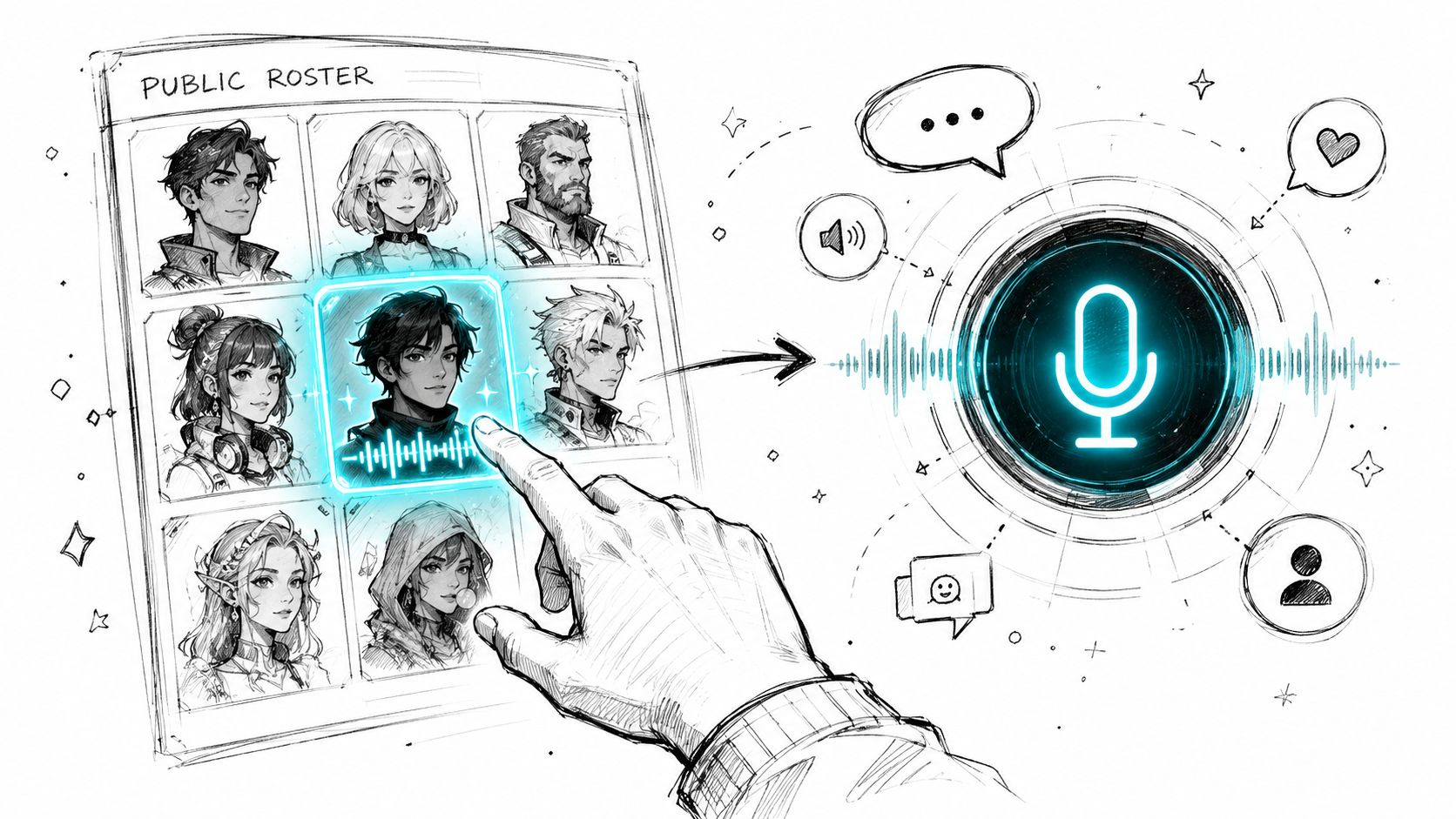
WSUP AI generates that exact line in the character's reviewed voice on demand. The text stays visible, so you can read first, listen second, and keep the full context in view.
Good habit: start with a simple, specific first prompt. If the line sounds wrong in your head, regenerate the reply before you play the audio.
That setup works best when you want voice to support the chat instead of taking over it. You can pause, resume, or replay the spoken line, then keep the thread going by text.
If you are building characters for this flow, see our guide on how to create an AI character.
Why On-Demand Audio Fits Character Chat
Character chat works better when voice is selective. Most of the exchange can stay in text while you scan, compare, and move quickly. Then you can play the line that carries the joke, the tension, or the emotional turn.
That balance is the point. Text handles structure and pacing. Voice adds delivery when you want it. Because each audio-enabled persona uses a staff-reviewed voice tied to that character, the spoken line feels like part of the roleplay instead of a generic assistant voice. For online character chat, that is usually more useful than forcing every turn into speech.
Five Things That Make Voice Chat Feel Natural
A voice feature can work on paper and still feel awkward when you use it. For WSUP AI's on-demand character audio, these are the checks that matter most:
Natural timing. The line should breathe, with pauses that feel intentional.
Adaptive voice. Tone and pitch should shift when the emotion shifts.
Text-to-audio fidelity. The spoken delivery should preserve the meaning and emotional intent of the visible reply.
Audio clarity. Clean sound matters more than flashy effects.
Smooth fallback. You should be able to move between audio and text without losing the thread.
Rule of thumb: if you can't replay a line and hear something new on the second listen, the voice is probably too flat.
If you are judging a live-call product instead, add live-call criteria like latency, interruption handling, microphone behavior, and turn detection. Those are important there, but they are not the main test for WSUP AI's text-to-speech flow.
The Rest of the WSUP AI Experience
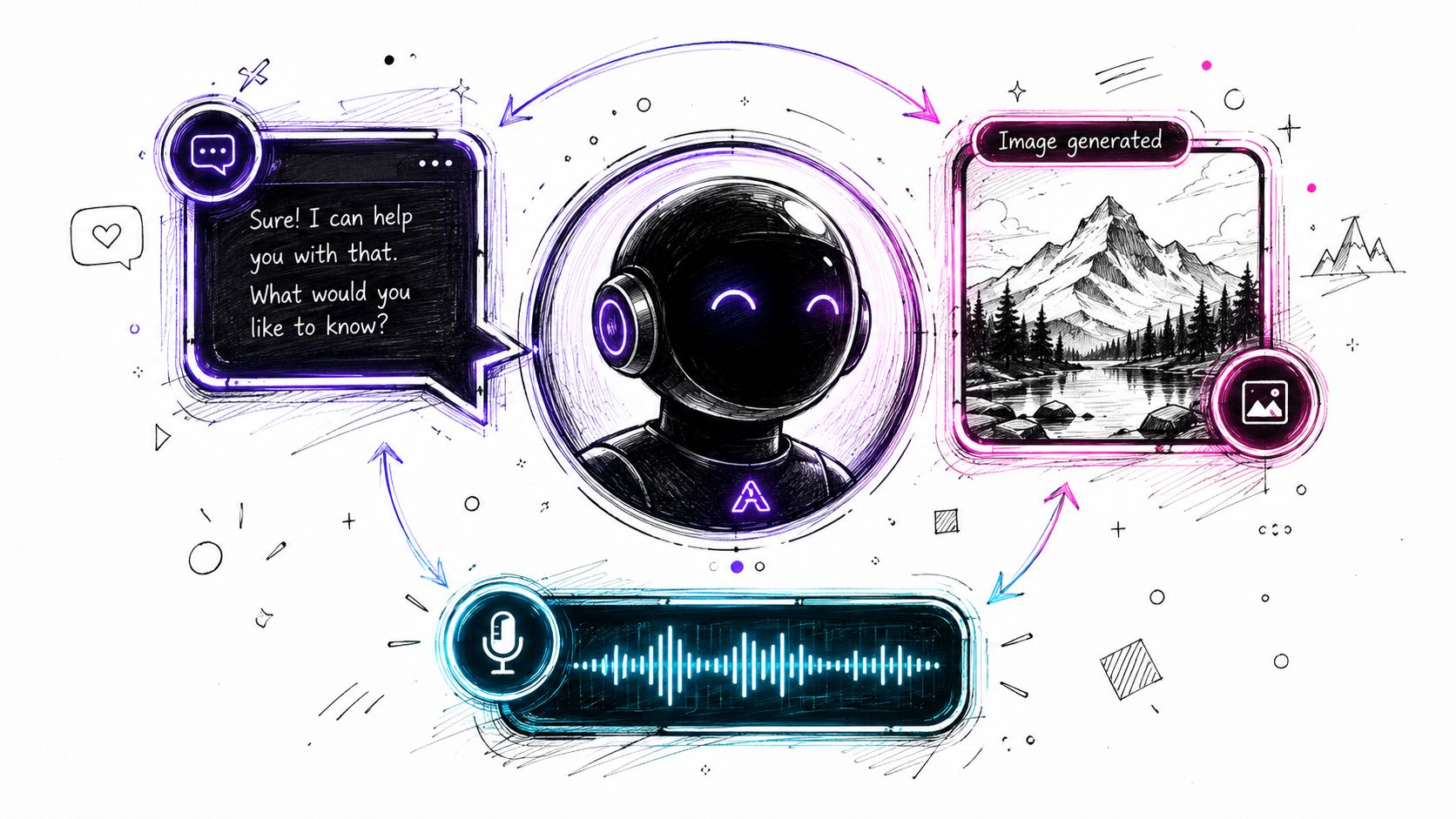
Voice is one part of the product. WSUP AI uses modern high-quality LLMs for character replies, lets you regenerate weak lines without restarting the thread, can return generated image replies, shows selected-character silent animated video previews, and includes a Create Character flow for building a description, backstory, opening message, and portrait. If you are building characters for this flow, see how to create an AI character. If you want a broader comparison, start with WSUP AI's character alternatives page.
Engagement Numbers From Real Voice Sessions
Voice use is not just a cosmetic switch. In a production PostHog cohort from the trailing 30 days through July 28, 2026, voice-engaged meant a session with at least one user message and at least one started character-audio playback. Text-only meant at least one user message and zero audio starts.
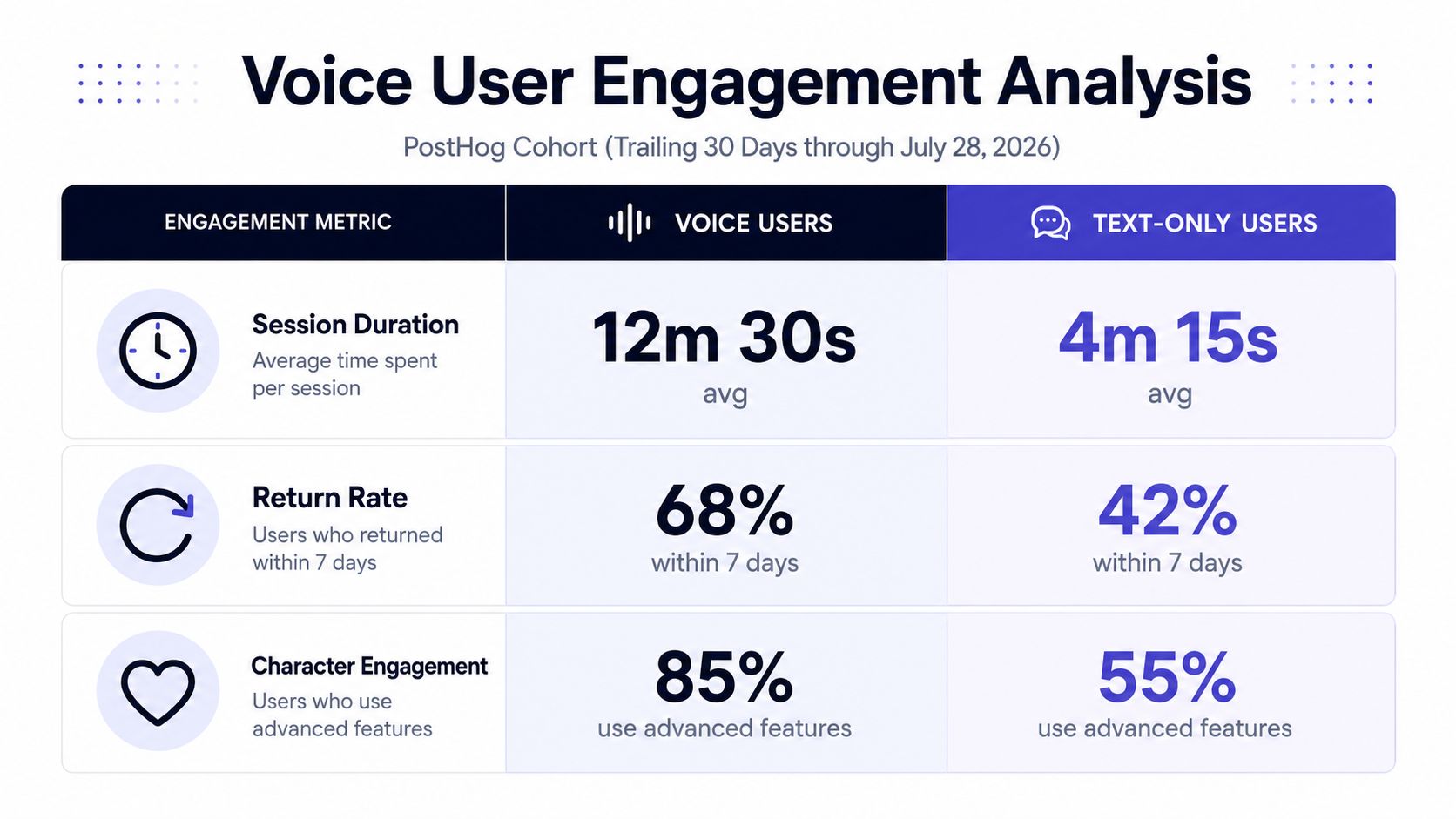
The cohort contained 436 voice-engaged sessions and 2,885 text-only sessions. Voice-engaged sessions averaged 51.1 user messages versus 38.6, a 32% gap, and an observed chat activity span of 2,512 seconds, or 41.9 minutes, versus 1,716.5 seconds, or 28.6 minutes, a 46% gap. The medians were 21 versus 14 messages and 19.4 versus 9.7 minutes.
Those numbers are useful, but keep the interpretation tight. They are descriptive correlation among sessions that included audio, not evidence that audio caused longer or deeper chats. The takeaway is simply that sessions with started character-audio playback were associated with more messages and longer observed activity spans than text-only sessions in this cohort.
Quick Answers
WSUP AI public audio is optional voice output on eligible character replies. It is not microphone input, not hands-free mode, and not a continuous live call.
Can I talk to WSUP AI through my microphone or use a live call?
No. The public character audio feature is voice output only. You type your message, then choose whether to play an eligible reply aloud.
Is the character audio pre-recorded, and can I replay it?
No. The audio is generated on demand for the specific reply you chose, not pulled from a library of stored clips. Yes, you can pause, resume, and replay the spoken line from the message controls.
Do I need an account to start chatting?
No. The first chat works as a guest. Signing in adds saved history, synchronized characters, and higher image and audio allowances.
If you want the simplest test, open a character on WSUP AI, send one text reply, and play audio on an eligible line to see whether this mode fits your chat style.