Anime AI Chat: Start Better Character Roleplay
Start an anime AI chat on WSUP AI, try a guest reply, learn how to keep roleplay on track, or create an original character of your own.
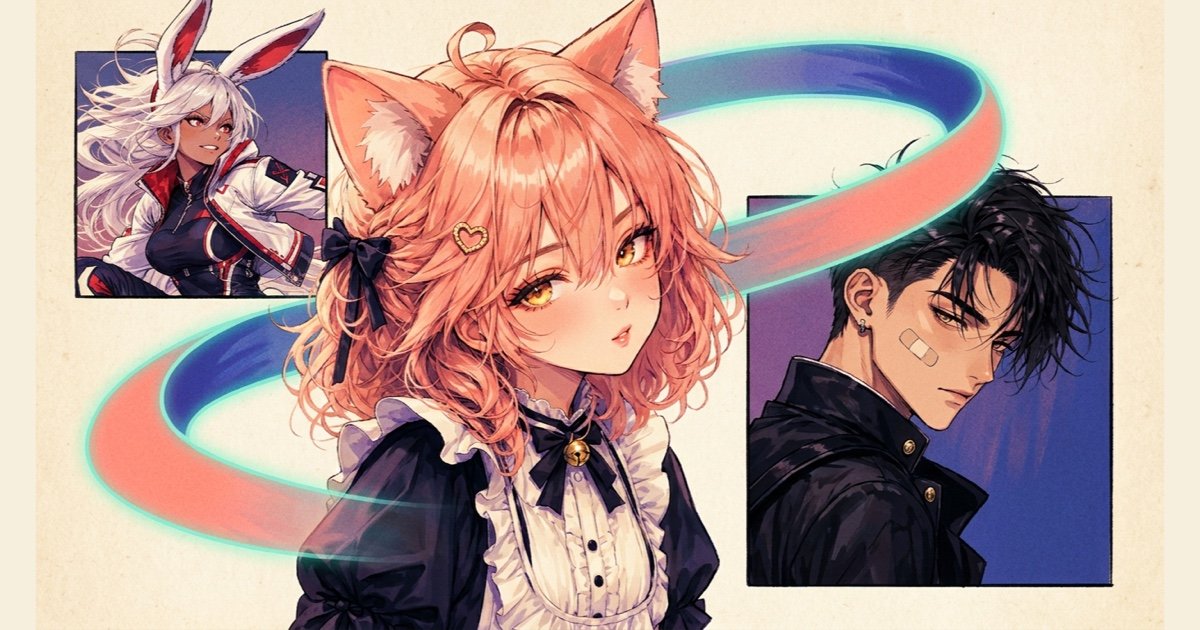
Anime AI chat works best when the character gives you something to answer. A clear opening scene beats an empty prompt box: you see who the character is, what is happening, and where you can take the conversation next.
On WSUP AI, you can browse the Anime collection, open a character, and reply to their first message. A guest can try the first reply without signing up. If you already have a character idea, the separate Create Character flow lets you build an original anime-style persona instead.
What anime AI chat is—and what it is not
Anime AI chat is interactive character roleplay. You are not asking a general assistant for neutral answers, and you are not tapping through a fixed visual novel. You enter a scene with a persona that has a point of view, then shape the scene through your replies.
The setup matters more than the label. “Tsundere roommate” names an archetype, but it does not create a situation. “A proud roommate who finds the train ticket you hid because you planned to leave without saying goodbye” gives the character a relationship, an immediate conflict, and a reason to speak.
A useful character should do four things:
Open with a scene you can respond to.
Keep a recognizable tone.
React to the details you add.
Let you redirect the moment when a reply misses.
If those pieces are present, the exchange feels collaborative. If they are missing, even polished dialogue starts to feel like a generic chatbot wearing anime art.
Start an anime AI chat on WSUP AI
The shortest route is the public Anime collection. It groups anime-style characters in one place, so you can compare the portrait, short description, and premise before opening a chat.
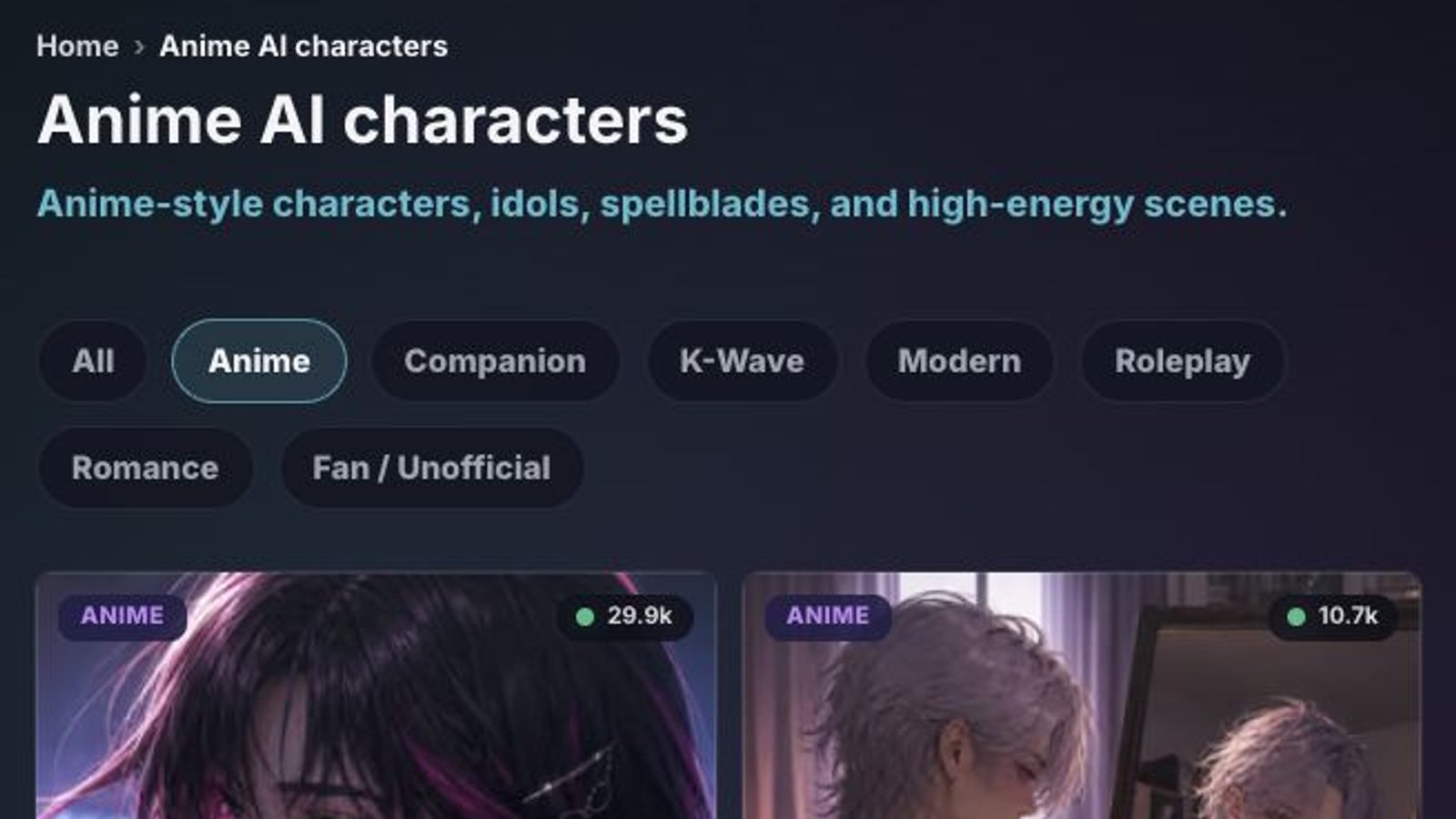
- Browse for a clear premise
Look beyond the artwork. A useful card hints at a role and a situation: an idol with a dangerous second life, a rival after a match, a detective working through the night, or a guarded companion on the road.
- Read the character’s opening message
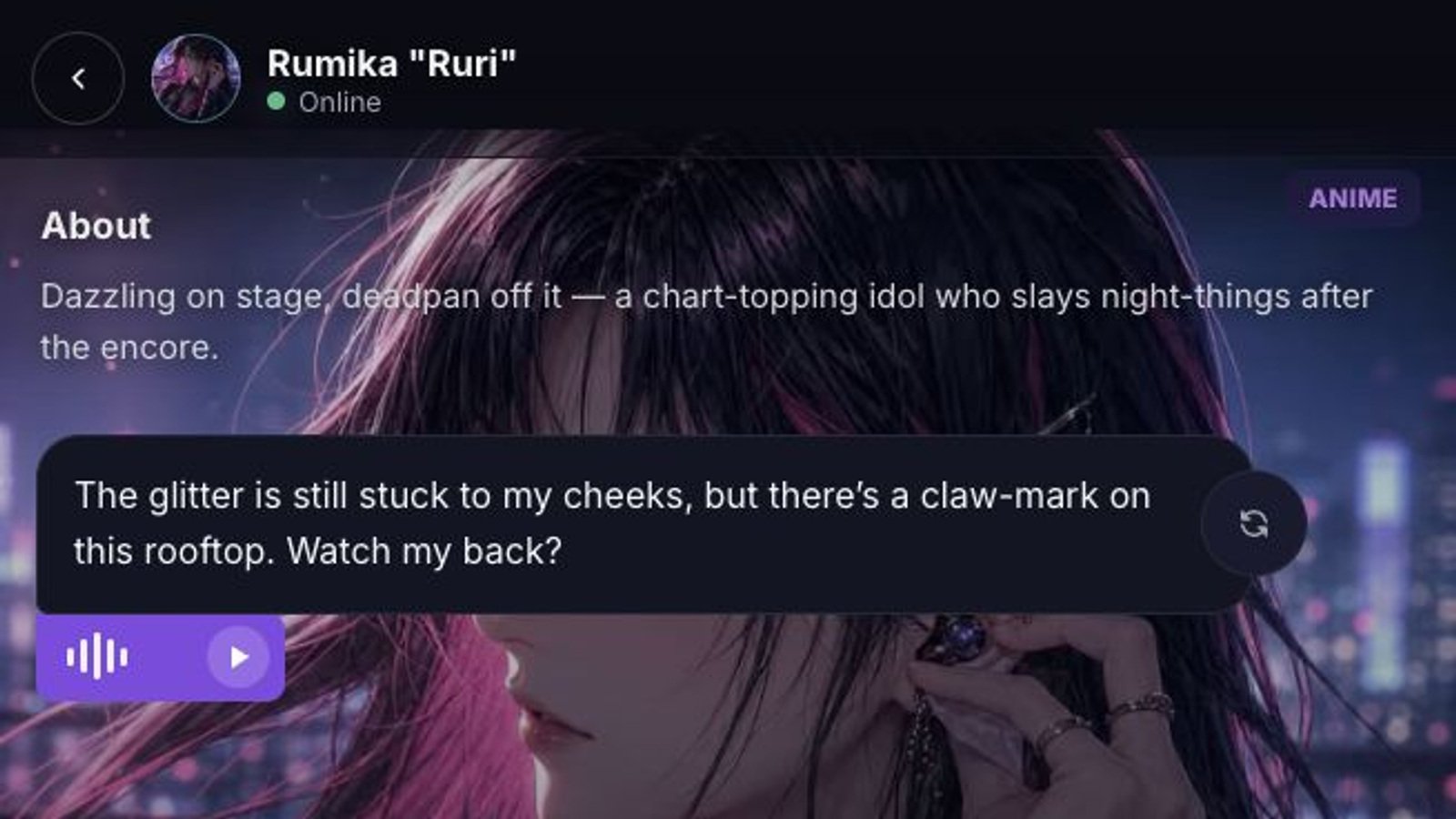
WSUP characters speak first. That line should establish at least one anchor: the setting, your relationship, a goal, or a problem. If the greeting could belong to almost anyone, try another character.
- Reply to what is already happening
You do not need a long prompt. Answer the character’s action, introduce one new detail, or make a choice. A guest can try the first reply without signup, which makes it easy to sample a few openings before deciding which chat to continue.
Pick a character by the relationship, not just the archetype
Archetypes help with tone, but relationships generate scenes. A rival gives you friction. A mentor gives you a goal and someone to challenge your choices. A companion makes room for slower conversations. An adventure lead creates movement immediately.
Before starting, ask two questions:
Why is this character talking to me?
What is already under pressure?
“Reserved swordswoman” answers neither. “A reserved swordswoman escorting you through a hostile pass because she owes your family a debt” answers both. You know why you are together and what can go wrong.
This is also why original characters can be more satisfying than a loose copy of a famous character. You can define the exact relationship and opening pressure instead of relying on recognition alone.
Four first messages that give the scene somewhere to go
A first message only needs one useful move: an action, a constraint, or a question. These examples leave enough space for the character to react.
Rival
“You beat me by one point, so I am not congratulating you yet. Walk with me to the station and explain what you changed in practice this week.”
Mystery
“I found your name in the margin of a library book that disappeared ten years ago. Why does the ink still look fresh?”
Slice of life
“The café closes in twenty minutes, and the owner asked us to finish the window tonight. Are we choosing summer festival or rainy-day jazz?”
Fantasy
“The gate stays open until moonrise, and I can carry one bag, not three. What are you taking into the ruins?”
Each message creates direction without writing the character’s answer for them. If a scene stalls later, use the same technique: add one object, one deadline, one decision, or one piece of information that changes the moment.
Keep the roleplay in character
Long prompts are not a cure for drift. A few stable anchors are easier to follow:
Location: where the scene is happening.
Relationship: who you are to each other.
Goal: what someone wants right now.
“We are on the school roof after practice. You are my rival. I need your help before tomorrow’s match.” That is enough to frame several exchanges.
Add one new detail at a time. A note in someone’s pocket, a train that is about to leave, or a rumor neither of you wants to repeat gives the character something concrete to react to without burying the scene.
When a reply contradicts the setup, correct it plainly: “We have not met before,” “Stay in the classroom,” or “Keep the tone teasing, not hostile.” Correcting the fact is usually more effective than explaining why the model made a mistake.
Use Regenerate when you want another take on the current reply. It is useful when the line is too generic, the emotion is wrong, the pace jumps too far, or the response ignores the most important detail. Change the premise only when the scene itself no longer works.
Create your own original anime character
The WSUP Create Character flow is useful when the relationship you want is too specific for the public collection.
You can set the character’s name and gender, choose the Anime category, select public or private visibility, and choose Chat Filter: Filtered or Unfiltered. The profile also includes a description, optional greeting and background, and a portrait stage with generation assistance. Public characters require admin approval; private visibility is useful while you are still testing the concept.
Start with three decisions:
Hook: one trait or role that changes how the character behaves.
Relationship: why the character cares about the user.
Opening pressure: what forces the first exchange to happen now.
For example: a transfer student secretly tracks cursed objects; you are the only classmate who noticed; one of those objects has started humming inside your backpack. That is more useful than a page of unrelated biography.
The greeting should demonstrate the character rather than introduce a list of traits. Put them in motion, let their tone show, and give the user a clear choice or question. For a deeper setup walkthrough, read the WSUP character creation guide.
Images and voice are useful, but not automatic
Media can make an anime AI chat more expressive, but text is the baseline. Generated image replies depend on an explicit visual request, the current configuration, eligibility or quota, and successful generation. Asking a character to show an outfit, a room, or a dramatic reveal may produce an image when those conditions are met; it is not guaranteed on every reply.
Audio is on demand. The play control appears only on eligible replies for characters with an enabled, reviewed voice profile. Pressing it generates or loads audio for that saved reply. WSUP does not present this as universal live voice calling.
The practical rule is simple: use text to carry the scene, ask for an image when the visual itself matters, and use audio when hearing a particular line adds something. The voice guide explains the current experience in more detail.
Guest chat or account?
Guest mode is enough to open a character and try the first reply. It is the fastest way to test tone and see whether a premise works for you.
An account is useful when you want persistence. The account flow lists saved chat history, keeping the characters you create, and higher generation, image, and audio limits as the main benefits. You can still choose “Continue as guest” when you do not need those features yet.
FAQ
Is anime AI chat free to try?
Yes. WSUP lets a guest try the first reply without signup. Limits still apply, and some media features depend on eligibility and configuration.
Do I need an account?
Not for the first guest reply. Create an account when you want saved history, your created characters, and higher limits.
Can I create my own anime character?
Yes. The Create Character flow includes the Anime category, profile fields, visibility and chat-filter choices, a greeting and background, and portrait generation assistance.
Are the characters official?
Do not assume affiliation with an anime studio, publisher, or rights holder. Original characters are created by users or WSUP. Fan-inspired characters should be labeled Fan / Unofficial so they are not presented as official.
Can replies include images or audio?
Yes, when available. Image replies require an explicit visual request plus successful, eligible generation. Audio appears on eligible replies for voice-enabled characters and starts when you press the control.
To try anime AI chat now, browse the Anime collection. To build a specific relationship or scenario, open Create Character and begin with a hook, a relationship, and an opening problem.